SEO on RoverPass Websites: What's Included
Search engine optimization (SEO) means setting up your website so Google can find it, understand it, and show it to campers who are searching. Most of that work is technical and invisible. Your RoverPass website does it for you.
This article explains each piece in plain English, so you know what you're getting.
Basic and Pro websites get the same SEO. Pro adds design and marketing extras, not better search setup. See RoverPass Websites to compare the plans.
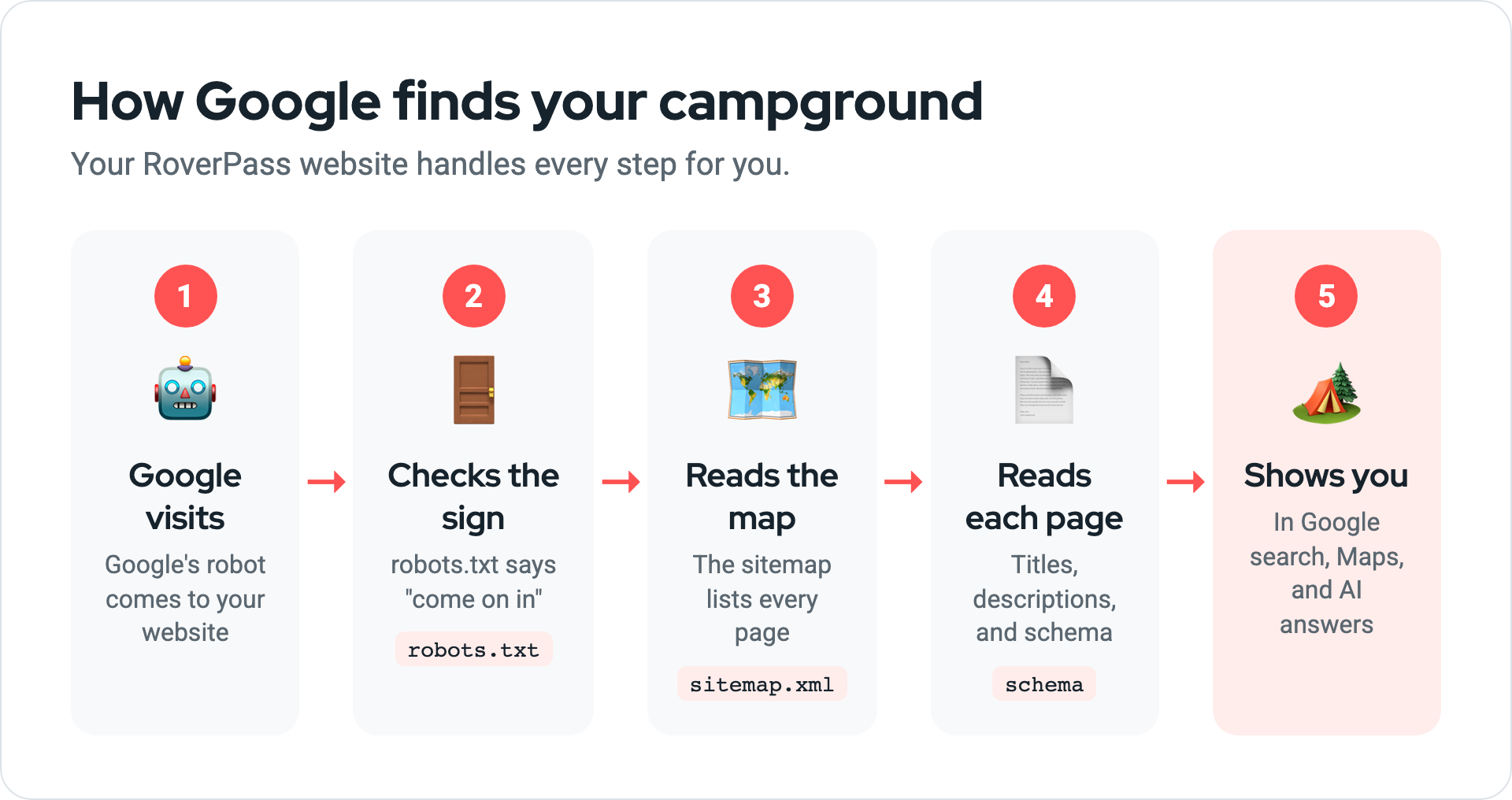
1. robots.txt: the welcome sign
What it is: A small file at yourdomain.com/robots.txt. It's the first thing Google checks when it visits. It tells Google which parts of your site it's allowed to read.
Why it matters: A wrong robots.txt can hide your whole website from Google. Ours tells Google and other search engines they're welcome to read everything, and it points them to your sitemap.
What you need to do: Nothing.
2. Sitemap: the map of your website
What it is: A list of every page on your website, at yourdomain.com/sitemap.xml. Think of it as the map at the campground entrance, made for Google.
Why it matters: Google finds new pages faster when they're on the map. Your sitemap updates by itself whenever you turn on a page or publish a blog post.
What you need to do: Nothing.
3. Page titles and descriptions: your Google listing
What it is: Every page has a title and a short description that only Google sees. They become the blue headline and the summary in search results.
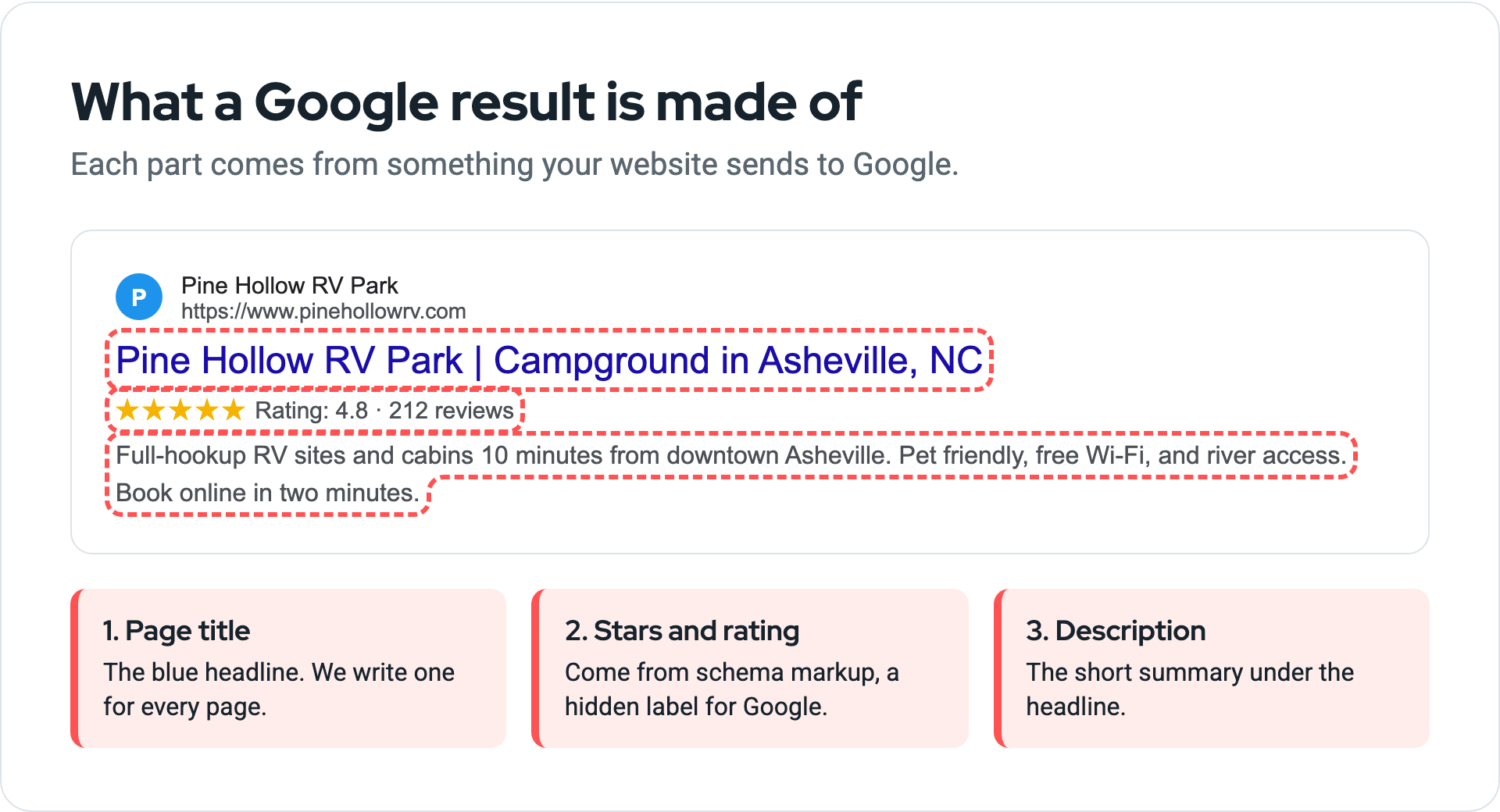
Why it matters: This is your first impression in Google. A clear title with your town name helps you show up when campers search for places to stay near them.
What you need to do: Nothing required. For the best results, keep your campground description in your RoverPass portal complete and current, because we use it for these.
Your pages also include the tags that control how your link looks when someone shares it on Facebook, in a text, or in an email.
4. Schema markup: a name tag for Google
What it is: Hidden labels on your website that state the facts about your business in a format Google reads: that you're a campground, your address, phone number, and guest rating.
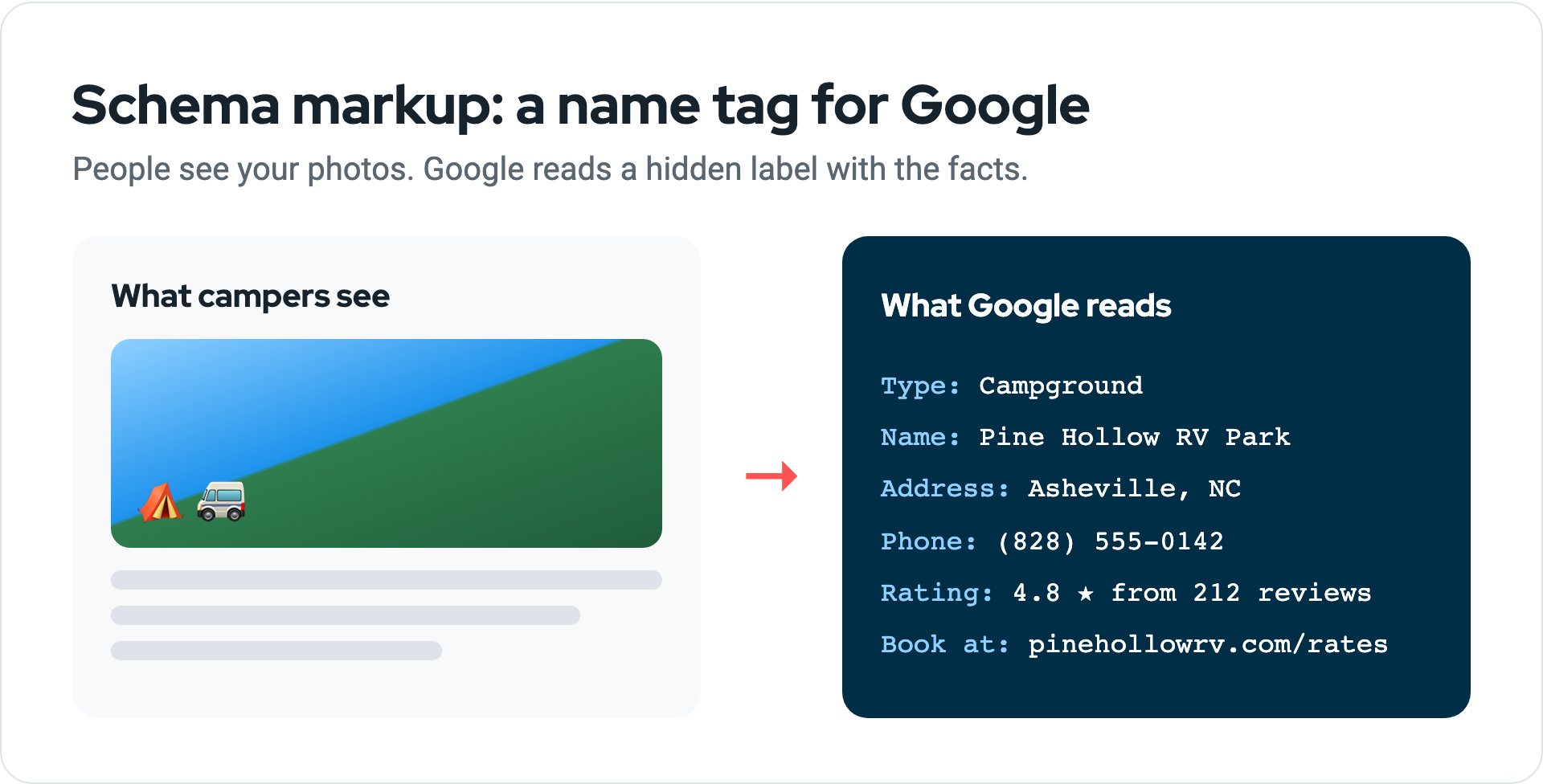
Why it matters: Google doesn't have to guess what your website is about. Schema can help your listing show extra details, like star ratings, right in search results.
What you need to do: Nothing. Your website includes this automatically, built from the information already in your RoverPass account. Keep your address, phone number, and photos up to date so the labels stay accurate.
5. llms.txt: a cheat sheet for AI
What it is: A short summary of your campground at yourdomain.com/llms.txt, written for AI assistants like ChatGPT, Claude, and Google's AI answers.
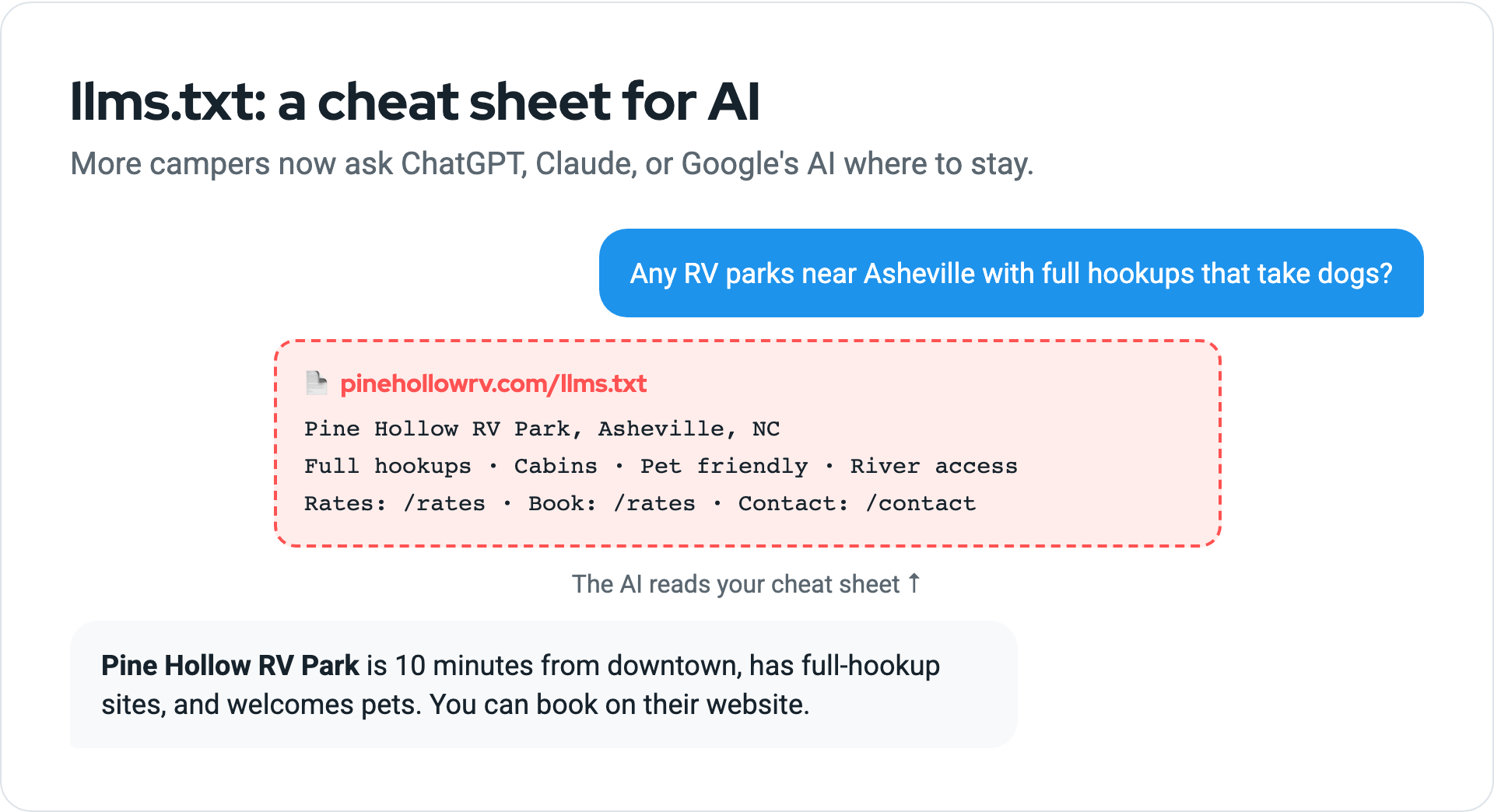
Why it matters: More campers now ask an AI where to stay instead of scrolling Google. A clear summary makes it easier for those tools to describe your campground correctly and send campers to your booking page.
What you need to do: Nothing. Like schema, your website includes this automatically, built from your RoverPass account.
Also included
- Pages search robots can read. When Google or an AI tool visits, we hand it a simple text version of each page with your amenities, rates, reviews, events, and contact details.
- Your own domain, with the padlock. Your site runs on your own web address with HTTPS, the padlock icon browsers show for secure sites. Google favors secure sites.
- Built for phones. Most campers search on their phone, and Google ranks mobile-friendly sites higher.
- Clean errors and redirects. Pages that don't exist tell Google "not found," so broken pages don't show up in search. If you're moving from an old website, we can send your old page addresses to the new ones so you keep your search rankings.
Tracking your results
Connect Google Analytics or Google Tag Manager to see how campers find your website:
What helps you rank higher
The technical setup gets Google to read your site. Where you rank also depends on things only you control:
- A complete campground description and at least 10 good photos.
- Guest reviews, and replies to them.
- Blog posts about your area: local events, hikes, fishing spots, things to do.
- An up-to-date Google Business Profile. This matters most for searches like "RV park near me."